
Ken Burns, America's documentarian, says the lesson of the USA's 250th birthday is about unity
Divided as we seem right now, Burns preaches the optimism of an America with a long history of uniting after deep divisions over 250 years.


Ken Burns is fond of dropping this saying, popularly attributed to Mark Twain: “History doesn’t repeat itself. But it rhymes.”
So I wasn’t surprised when we spent loads of times talking about the lessons America’s revolution offered for people in today’s time during an in-depth conversation taped in January for Tampa’s PBS station, WEDU-TV.
I found myself thinking of Burns a bit over the past holiday weekend, as a divided and traumatized nation negotiated heat waves, a politicized July 4th celebration, a march by white supremacists in the nation’s capital, fireworks unleashed there thick enough to bring an air quality warning and more.
The documentarian -- often called “America’s historian” for the popularity, breadth and reach of films like Baseball, The Civil War, Jazz and his latest six-part work, The American Revolution – is practiced at walking a fine line between standing up for the importance of well-researched historical storytelling and avoiding overt connections to modern political fights.

“ What we’ve learned from our history is, it’s really hard to get together,” he told me. “It’s really hard to stay together. And then, once the fissures happen, it’s really hard to put it all back together again. But we’ve done that again and again, and that may be one of the optimistic things about history.”
For Burns, part of America’s story is overcoming polarization after conflict, from the Revolutionary War to the Civil War and beyond: “Like we say, ‘Oh, we’re so divided now.’ But we [were] way more divided then, because as you’re saying, some people [were] loyalists [to the British monarchy], some people [were] patriots…There’s lots of wonderful things that I think speak to our present moment without us having to say, ‘Oh, isn’t that kind of like the stuff that we’re going through now?’”
Check out our conversation in full here:
And check out the first episode from The American Revolution, which PBS re-aired over the weekend, right here:
Burns spoke with Meet the Press in an interview aired Sunday where he talked more about how history can be a teacher and how these stories can bring Americans together around solid, unsanitized facts.
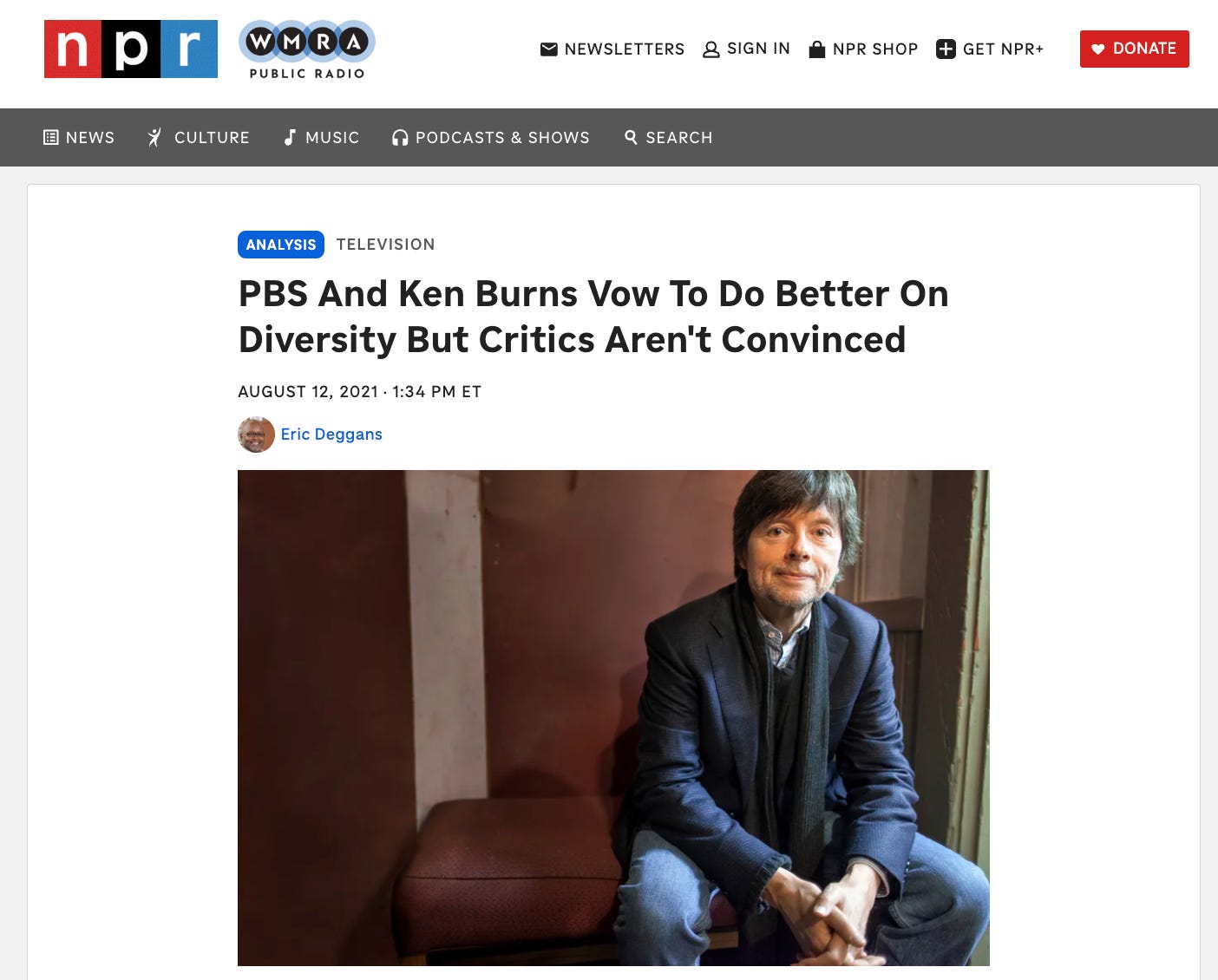
Our talk in January wasn’t my first time interviewing Burns. He’s been gracious enough to talk with me many times over the years – even after I reported a story for NPR on an open letter signed by 140 other documentary filmmakers citing him as an example of how the service unfairly directs more resources to white filmmakers.
Burns responded to that letter back then the same way PBS did, by saying he thought they were doing a good job, but were willing to work hard to do better. “We will take this on and we will figure out how to make it right and do a better job,” he said during a press conference in 2021 that I attended. “I personally commit to that. ... How could you possible take umbrage at the idea there could be more empowerment, there could be more representation, there could be more stories told?”
That was the kind of response you’d expect from someone who talks about historical events the way Burns did in our interview this year. But at a time when politics has become even more polarized – fueled in part by the rise of MAGA conservatism and Donald Trump’s aggressive moves to build a more authoritarian presidency, including attempts to co-opt and intimidate historians, museum and cultural centers – such open-minded dialogue is in short supply.
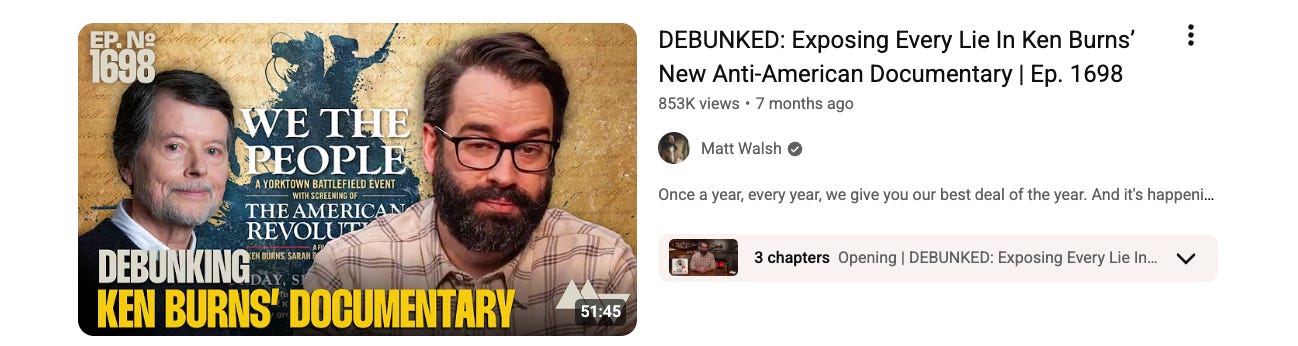
Burns’ American Revolution has been attacked online by prominent conservatives like Rich Lowry – who claimed it was too “politically correct” regarding Native Americans -- and Matt Walsh, who called the PBS series an “anti-American documentary.”
For some critics, it seems any reading of American history which doesn’t exalt the founders and white settlers who created the nation is to be suspect and condemned. The story of America’s founding has always been an important propaganda tool in advancing the idea of American exceptionalism – the idea that this country is so special and important, it rises above all others regardless of circumstance or action.
Of course, there are others of us who believe that, for America to truly emerge as an exceptional nation, it has to work hard everyday to ensure equality and justice for all in a multiracial democracy. That means asking tough questions about the treatment of marginalized groups, avoiding the demonization of those who lack power and having the courage to face the truth of systemic oppression while working to dismantle it.
Most of all, as Burns notes, we have to find ways of discussing these issues in good faith and coming together on compromises which bring us together. To me, the great tragedy of Trump’s MAGA movement is that it often abandons the idea of respectful discussions based on established facts to find the best way forward for everyone.
Instead, Trump and his acolytes have often used their power and authority to impose their policies on everyone, with little regard for the perspectives of those who do not support their cause. Arguments aimed at bolstering their vision seem rooted in appeals to loyalty, bad faith contentions rooted in assumptions or incorrect facts and a reflex of judging situations on how they benefit their cause, rather than what the facts dictate.
Burns remains optimistic the country will find its way through these times, however, based on his work exploring America’s history.
“I’ve been out on the road for most of the last year talking about [The American Revolution], and everybody’s really upset about how divided we are,” he said. “And I can just say to them, we were more divided during the revolution. Way more divided during the Civil War. During Vietnam, there were hundreds of bombings between the late 60s and mid 70s, hundreds, hundreds of bombings. When was the last bombing you remember?”
He also pushed back against the idea that being an optimist in today’s times was some sort of insult. “Being armed with history, our best teacher, it also provides you with a kind of perspective on the present moment that allows you not to fall into this, you know, Chicken Little, the sky is falling kind of kind of thing,” he said. “I remember recently there was some newspaper that wrote an article, and it was really clear by the word optimist or optimism that the writer had about me, that it was a naive or pejorative condition. And I reject that completely.”
Burns’ conclusion: “I think cynicism is a luxury for jet setters and jaded journalists.”