


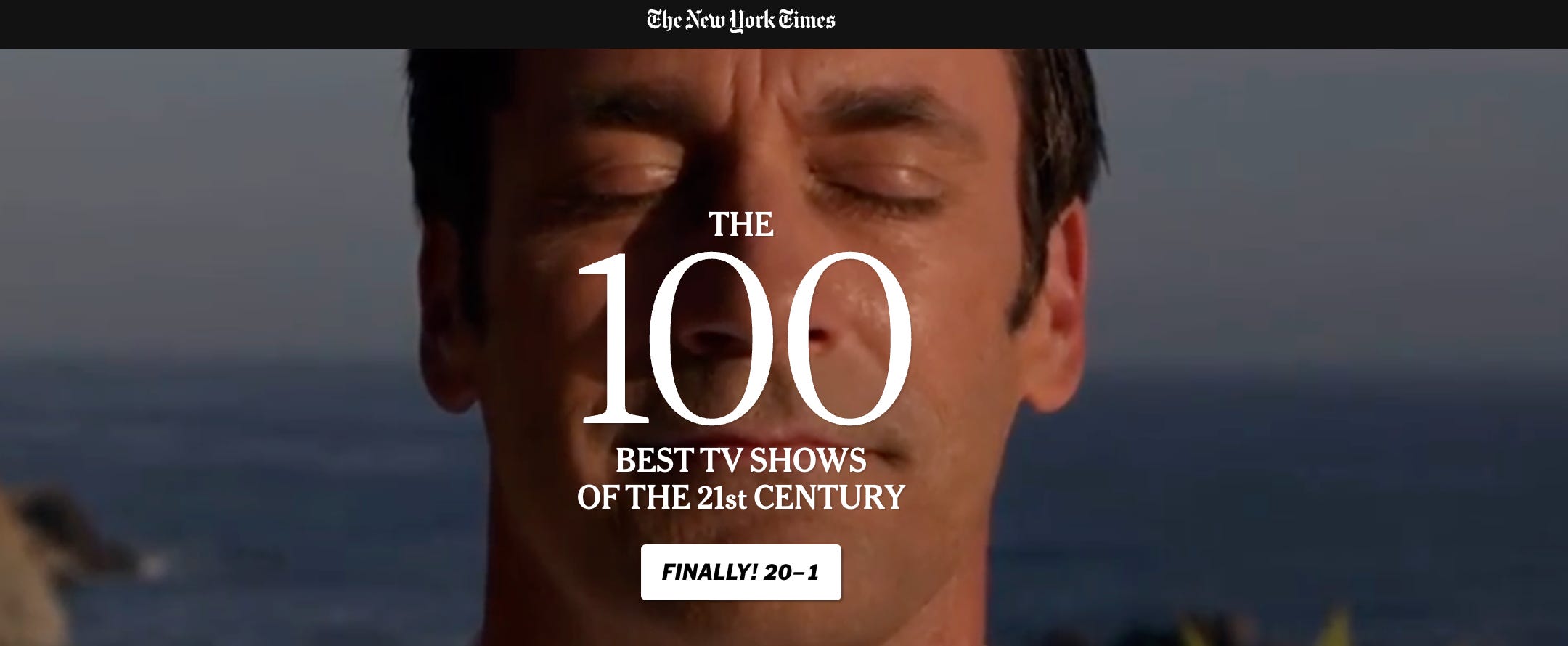
The longer I spend doing this TV/media critic thing, the more I come to hate lists like The New York Times’ recent 100 Best TV Shows of the 21st Century.
It’s not that I’m miffed I didn’t get a vote among the 500 tastemakers polled for this tally – though I did vote in Rolling Stone’s list of 100 best shows ever, cobbled together three years ago. I also voted in the BBC’s version of this list from FIVE years ago, which put The Wire in the top slot.
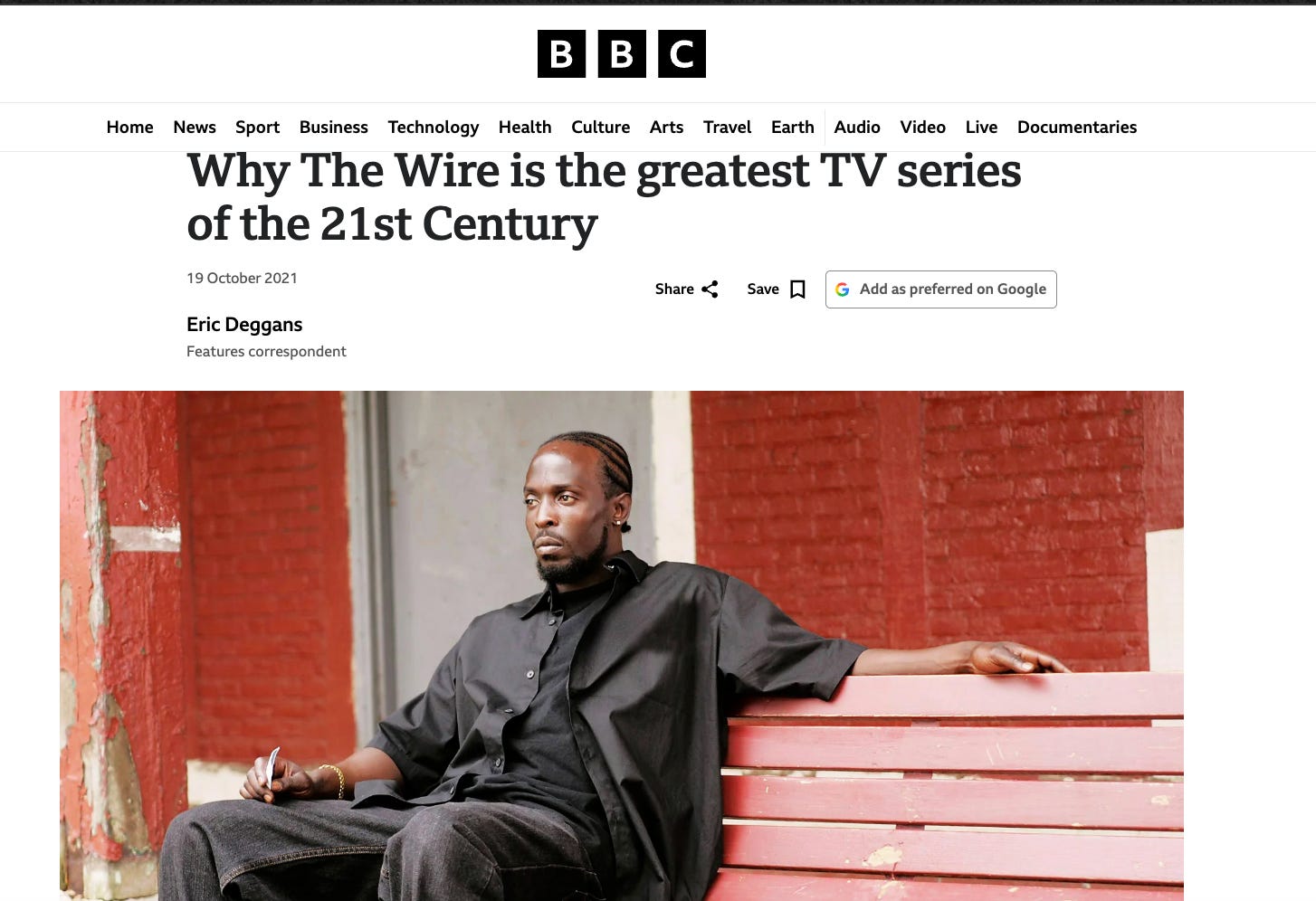
I was honored when the BBC asked me to write an essay explaining why The Wire deserved that position – a stance I remain convinced of, even after perusing the New York Times’ new list – because, after nearly 30 years of dissecting the TV industry for everyone from NPR to the, um, New York Times, I like to think I learned a few things.
I am a little irritated by the way lists like this are designed to spark debates and conflict. The very act of claiming one landmark show deserves to be ranked higher or lower than another landmark show virtually guarantees fans will be going at each other online, making the piece a viral hit regardless of why people are talking on it.
But my resistance to projects like this one mostly has a different origin. First, they’re always structured in ways that make you suspect there is more than the quality of the show factoring into their place in the ranking.
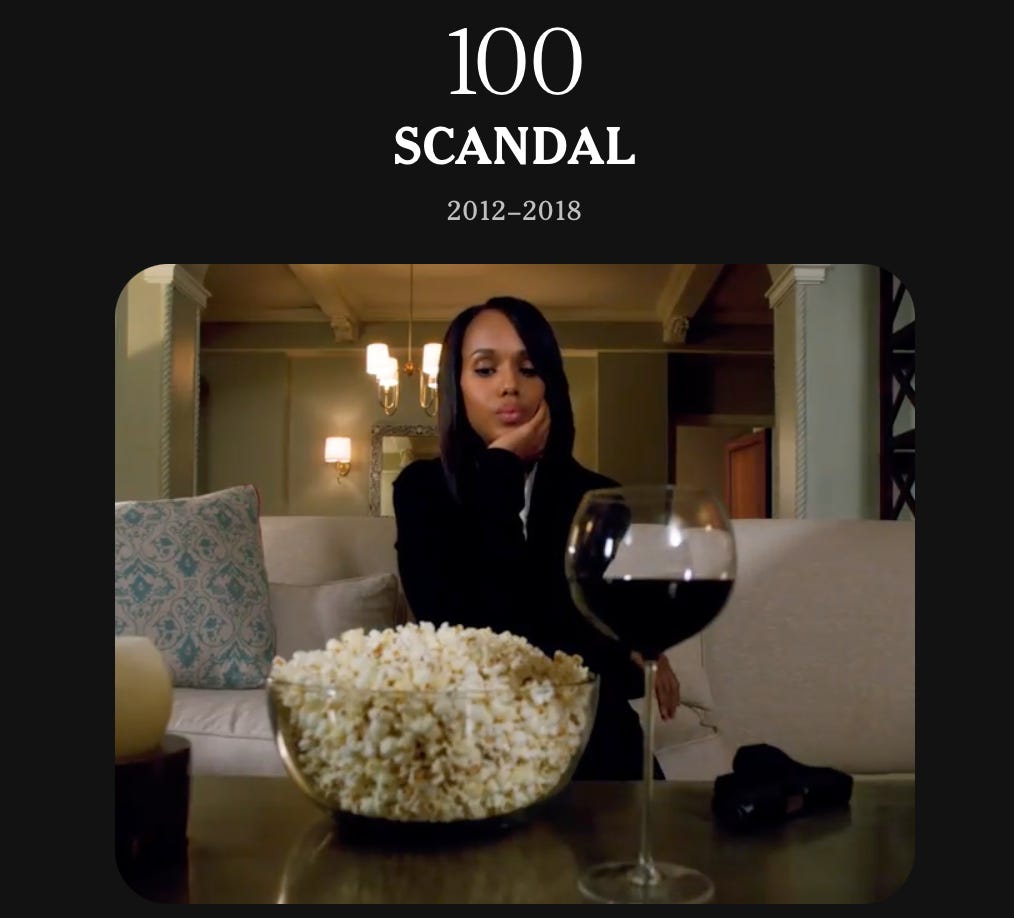
These kinds of lists are usually rolled out in reverse – to build suspense, of course – and they often start with a recognizable entry that draws readers/audience into the list, regardless of whether that entry actually deserves to be there. In the NYT’s case, this position falls to Scandal, a groundbreaking, compelling program that was only the second network drama to star a Black woman in television history when it debuted in 2012.
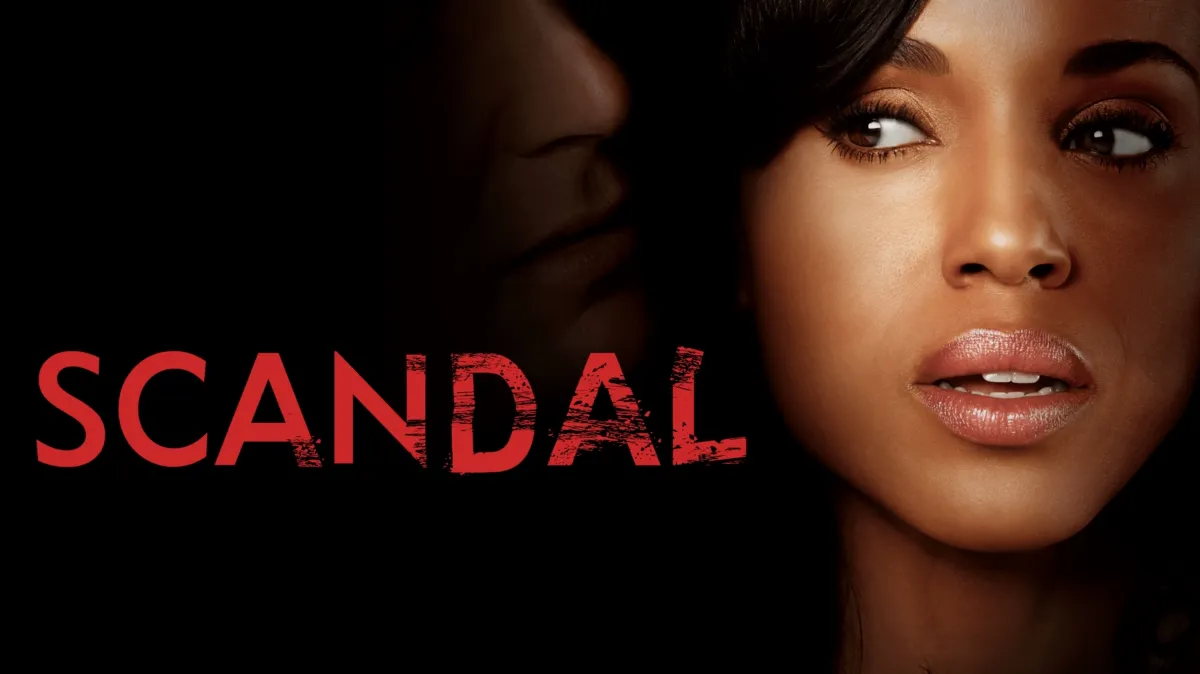
Scandal launched Kerry Washington as a major star, established Shonda Rhimes as a producer/showrunner who could create more than one hit program (eventually, her shows would own ABC primetime on Thursday nights), unleashed the amazing Joe Morton on network TV as Papa Pope and inspired legions of women to gather in watch parties across the nation to watch the travails and triumphs of a woman who truly ran the world.
So why is this show parked 40 slots below PEN15, Peep Show and Nathan for You? Is it because they wanted a recognizable program to be the first thing readers saw when they looked at the initial group of listings? Maybe that’s just where the votes panned out, but my critic’s Spidey Sense is tingling on that one.
(UPDATE: After this essay was published, a friend at the New York Times assured me the rankings on the list were the results of tabulating votes and no editor hanky panky.)
Fans may grouse about the NYT’s rule that The Sopranos was excluded because it debuted before the 21st Century actually started, in 1999 – though most of its episodes aired in this century. But I get why they made that call. It helps differentiate their list from Rolling Stone’s list, for example, which also included shows like The Simpsons and Saturday Night Live, which have continued to air through the 21st Century but started much earlier. And it adds suspense by removing a show from contention which would have certainly landed in the top spot if it were in the running.


Still, I think this rule also cuts out a lot of other seminal TV shows that were responsible for the quality TV we’re watching now. HBO’s first scripted drama, Oz, ran from 1997 to 2003, busting all the conventions of typical television dramas and helping the premium cable outlet realize it could succeed with explicit, gritty material that challenged audiences (I can’t really imagine HBO making The Wire or The Sopranos if it hadn’t started defining its subversive original voice with Oz). And there’s also Sex and the City, which started in 1998 and ran to 2004, pioneering TV comedy in the same way The Sopranos moved the needle in television drama.
I think a guideline that edges out shows like this mostly highlights how arbitrary these kinds of rules are when it comes to truly charting the advancement of art. The fact is, three of the best shows which aired episodes in the 21st Century and were architects of the complex filmic style of TV we enjoy today were excluded from the NYT’s list because they happened to DEBUT a bit before the 21st Century actually started.
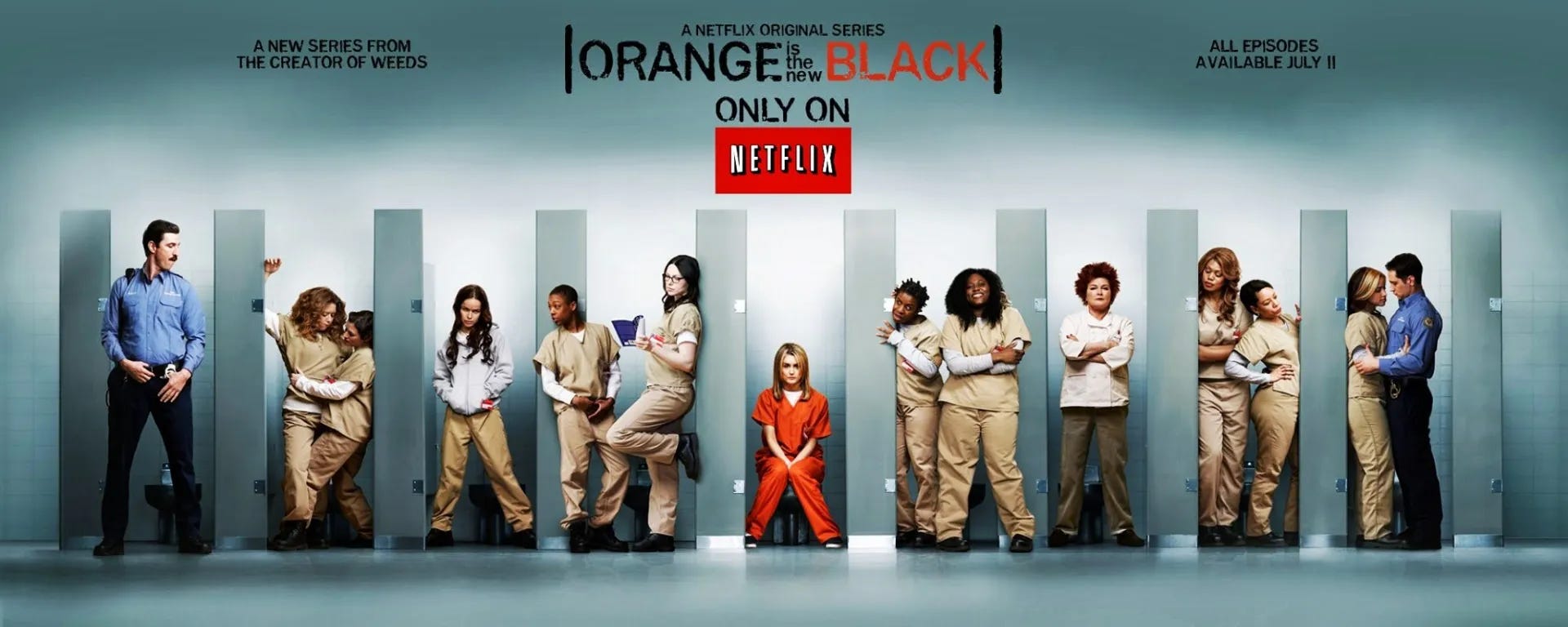
Don’t get me started on the exclusion of Orange is the New Black, which actually qualifies for the list and pioneered the kind of drama-fueled comedy currently lauded on The Bear and Widow’s Bay. It debuted months after House of Cards as Netflix’s third original scripted series, gave pop culture the amazing Uzo Aduba, Danielle Brooks, Natasha Lyonne and Samira Wiley, but somehow can’t get onto this list?
Which, of course, brings us to many other deserving shows which got left off this tally. My list includes Fargo, The Boys, Brooklyn Nine Nine, Mr. Robot, WandaVision and the modern episodes of Doctor Who. There are less than a dozen programs on the NYT’s list that could be classified as “genre” works like science fiction, fantasy or superhero stories, so it seems the Grey Lady is just continuing the snobbery we see in the Emmys, which might explain a lot of the omissions I found irritating.
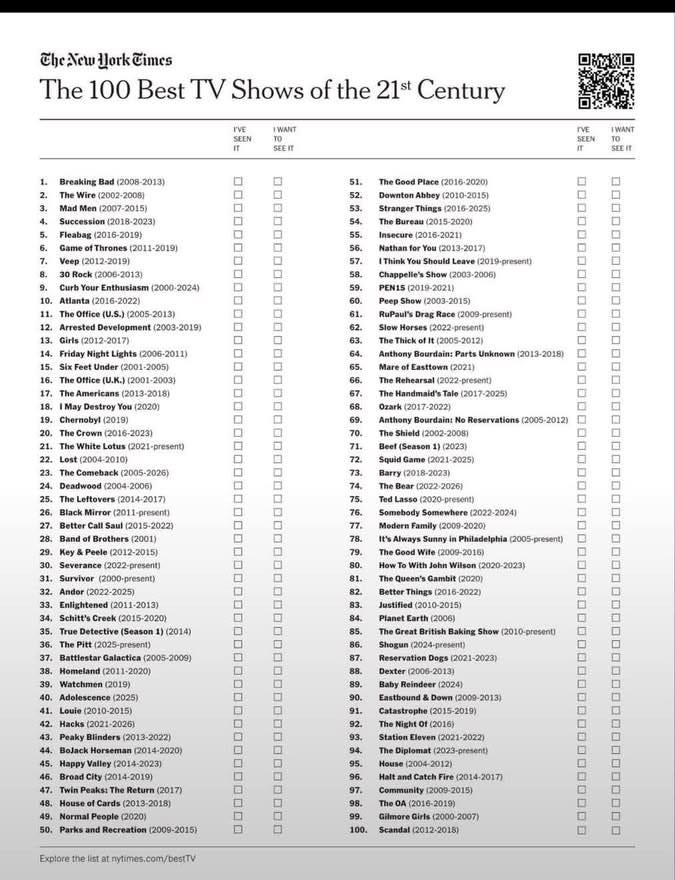
And there’s the rankings. I’m baffled at some of the placements. Much as I respected Twin Peaks: The Return, I just didn’t see it as epic, entertaining or frankly even as understandable as Shogun, which is listed 39 slots lower.
Much as I love the easy camaraderie of The Great British Baking Show, is it really a bigger TV achievement than the twisted drama of Dexter, the gritty pathos of The Night Of or the classic character study that was House – all of whom ranked lower?
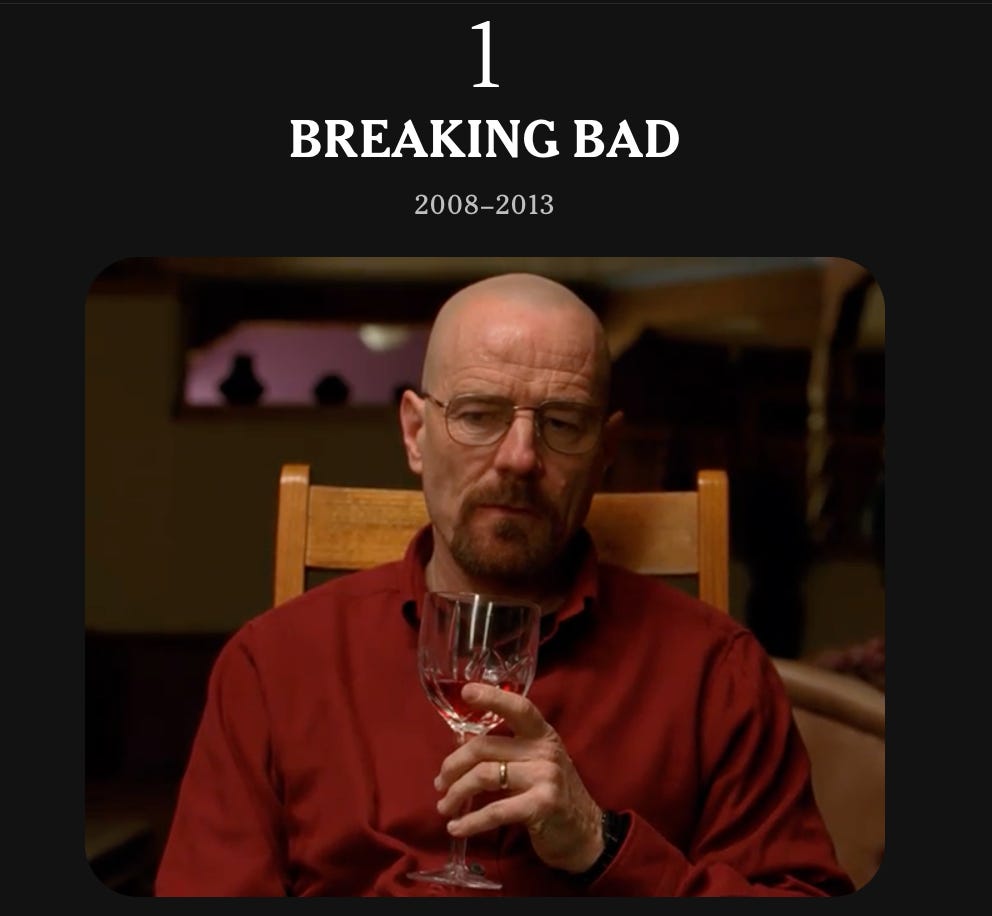
And the top spot. As groundbreaking as Breaking Bad is – and I was one of those critics begging my readers to watch the first few seasons of that show, which had anemic ratings on AMC before it blew up on Netflix – I don’t think it is even a better show than Better Call Saul (at position #27, for some reason). And this is no shade on Breaking Bad. But the same crew which made that show took every lesson from Breaking Bad and pushed it to the limit on the spinoff Saul -- creating a more complex story, focused on a more unlikely character, revealing the compelling Rhea Seehorn as a person who doesn’t appear in the mothership show.
But, as I noted in my essay for The BBC, The Wire truly deserves that top spot. Not just because its storylines and cast feature a much wider diversity of characters than Breaking Bad, but because its story isn’t just about the corroded soul of one man.
The Wire is about the systematic failure of every major institution that residents of a major city count on – from the preoccupation of the police on a failed war on drugs to the inability of unions to secure stable, middle class incomes for laborers; a school system which can’t educate its children; a political system which features people who are somehow bigger crooks than the most powerful drug dealers and a local press so hobbled by cutbacks and a focus on winning prizes it misses all of this.
Tough as it is to compare art which is so different, I do have something of a system for judging shows against each other. Beyond the quality of the production itself, I factor in its contribution to the evolution of the form, its endurance in the cultural conversation and the legacy of its contributors. Given how this list was assembled, it’s tough to know what exactly explains why Enlightened scored higher than Barry, The Bear and Ted Lasso. Or why The Comeback outpaced Deadwood, Better Call Saul and Band of Brothers.
Admittedly, the NYT’s package is truly the best iteration of this kind of list I have seen. There’s video interviews with people from key shows, quotes from notable people who voted and compelling capsule reviews written by the NYT’s ace critics.
Still, ultimately, I dislike lists like this because they suggest there is some objective roster that is the “correct” lineup of series. It attaches an outsize importance to dates as a definitive measure of eras in art, when the truth is much more nuanced. And the sensibilities which often forge these “authoritative” tallies is usually so far removed from my own perspective that it feels more like a Rorschach test.
What that test reveals: Whose perspective really controls things in the TV industry – and in the TV critic’s game. That lesson may be the most informative — and depressing — aspect of this list after all.
I love-hate these lists. I’m completely sucked in to the debate-stirring element but I also think it’s pointless to rank shows on the vague measurement of “quality.”
I made my own hyper-subjective list a few months ago that let me air all my opinions that these lists stir up without the necessity of defining some objective level of greatness. I’d be delighted if anyone wanted to give my list a look or share thoughts!
https://sophie4604.substack.com/p/best-tv-shows-of-all-time-where-time?utm_source=direct&r=1lzpo3&utm_campaign=post-expanded-share&utm_medium=post%20viewer
How is the WORLD do they omit WandaVision? That show actually reaches its audience about the history of television in such a novel, welcome way! I don't waste my time with list discourse, either. I literally don't have time, and well, you did a great job of detailing the other reasons.